Asbestos Abatement and Removal in Metro Denver
Licensed removal of asbestos-containing materials from homes, rental properties and commercial buildings across the Denver metro area.
Free On-Site Estimate
We walk the property, review the survey and price the actual scope. No charge, no obligation.
State Notification Handled
When your project crosses the trigger levels, we prepare and file the CDPHE notification. You do not touch the paperwork.
Clearance Documentation
You get the records your contractor, buyer or insurer needs before the area is released
How an Asbestos Removal Project Actually Runs
Every job follows the same sequence, whether it is one bathroom floor or an entire commercial floor plate. Nothing gets skipped because the job is small.
You will know which rooms close, for how long, and when you can use them again.
Commercial and Multi-Unit
Offices, retail, apartments and rentals, scheduled around occupancy.
Project Steps
- Survey review
- On-site walkthrough and estimate
- Scheduling, plus state notification if required
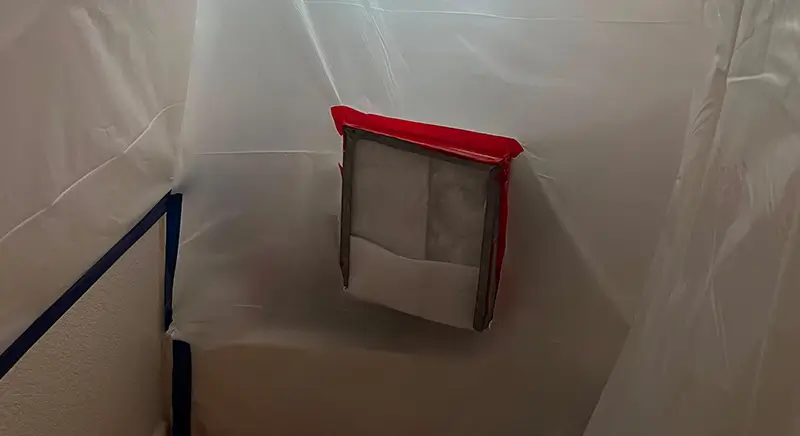
- Containment and negative air setup
- Removal and decontamination
- Clearance and release
What We Remove From Colorado Properties
Most asbestos in this state sits in buildings put up before the mid-eighties. If your property is older than that, these are the usual suspects.
Popcorn and Textured Ceilings
The most common residential job in Denver. Removed wet, under containment, never dry-sanded.
Vinyl Floor Tile
Often hiding under newer flooring, along with the black mastic underneath it.
Pipe and Boiler Insulation
Wrapped lagging in basements and crawlspaces. Friable, so it needs full containment.
Drywall and Joint Compound
Taping compound used before the eighties frequently tests positive.
Attic and Wall Insulation
Vermiculite especially. Do not disturb it before it has been tested.
Ceiling Tiles and Adhesives
Common in finished basements and older commercial spaces.
Siding and Roofing
Transite panels and asphalt shingles on pre-1980 exteriors.
Duct Wrap and HVAC Insulation
Paper-backed wrap around older furnace and duct runs.
Questions People Actually Ask
Do I need the material tested before you can remove it?
Usually yes. Removal is priced and permitted based on what the material actually is, so it has to be confirmed first. Testing has to be done by a Colorado-certified asbestos building inspector. If you do not have a survey, tell us what you are looking at and we will point you to what your project needs. We do not charge to answer that.
Can I stay in the house while you work?
Often yes, depending on where the material is and how large the area is. The work area is sealed off and kept under negative air, so the rest of the property stays isolated. We tell you the access restrictions before the first day, not after.
How long does it take?
Most residential projects finish in one to two days. Larger properties take longer. If your project crosses the state trigger levels, add ten working days for the notification period ahead of that, which is why it is worth calling before your contractor is already scheduled.
What does it cost?
It depends on the material, the quantity and how hard it is to reach. Small jobs carry a minimum, because setting up containment and negative air costs the same in a single bathroom as it does in a full basement. You get a firm number after the walkthrough, not a range that changes on invoice day.
How do I know if my project needs state notification?
For a single-family home, the trigger levels are 50 linear feet on pipes, 32 square feet on other surfaces, or the volume equivalent of a 55-gallon drum. Commercial and multi-unit buildings have higher thresholds. Above any trigger level, the state has to be notified in advance and the work has to be done by a certified abatement contractor. We handle the filing.
What if my project is under the trigger levels?
No state notification is required, and the work can usually be scheduled within days. The removal itself does not change. Containment, negative air and disposal are handled the same way whether the state is watching or not.
Do you work with insurance?
Yes. We prepare scope documentation for restoration projects moving through a claim and coordinate with adjusters and restoration contractors.
Where We Work
Most of our work happens across the Denver metro area: Denver, Aurora, Lakewood, Arvada, Westminster, Thornton, Centennial, Englewood, Littleton and Commerce City, across Adams, Arapahoe, Denver, Douglas and Jefferson counties.
We also travel. Westworth takes projects anywhere within approximately 180 miles of Denver, which covers most of Colorado including Colorado Springs, Fort Collins, Greeley, Pueblo, Glenwood Springs and the mountain communities in between.
Outside that radius, call anyway and we will tell you whether we can take it.
Who We Work With
- Homeowners
- Restoration companies
- General contractors
- Property management companies
- Commercial property owners
- Insurance and restoration professionals
Get a Real Number, Not a Range
Send the survey if you have one. If not, describe what you are looking at and where it is. One of the owners will get back to you.
- Free estimate, on site, with no obligation
- State notification and disposal documentation handled
- Emergency response available 24/7